

Saying “May Allah bless you” is one of the most beautiful and heartfelt expressions in Islam. These words carry deep love, care, and sincerity. When a Muslim says this to someone, it comes straight from the heart.
In Arabic, this phrase has a special power and meaning that goes beyond ordinary words. It is a prayer a genuine wish for someone’s well-being, happiness, and protection. Understanding its true meaning makes it even more special and meaningful.
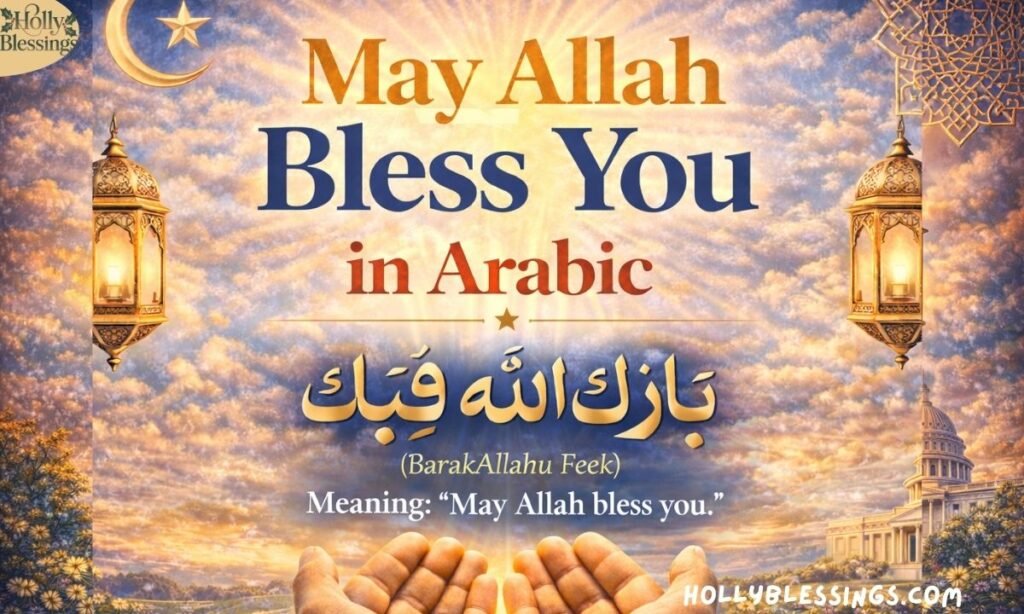
May Allah Bless You in Arabic
- The Arabic phrase “may Allah bless you” is often said as “Barakallahu Feek” or “Allah Yubarik Feek” both carry the meaning: May Allah bless you with goodness and success.
- In Arabic script it is written as: بارك الله فيك
- The word “Barak” means to bless, and “Feek” means “in you” so it literally means “May Allah place blessings in you.”
- Saying these words is more than polite speech it reflects the belief that every blessing comes from Allah.
- This phrase is used every day in homes, mosques, markets, and workplaces across the Muslim world.
- It is one of the most widely used Islamic expressions for showing love, gratitude, and goodwill.
- You do not need a special occasion to say it it can be said anytime to anyone you care about.
- It connects hearts and reminds both the speaker and the listener that kindness is a form of worship.
Understanding the Meaning Behind “May Allah Bless You in Arabic”
- This expression carries deep cultural, spiritual, and emotional meaning it reflects gratitude, kindness, and faith.
- The phrase is a dua a personal prayer made directly to Allah on behalf of someone else.
- It means: “I am asking Allah Himself to bless you, protect you, and fill your life with goodness.”
- It is not just a greeting it is an act of worship and an expression of pure love.
- When a Muslim says “May Allah bless you,” it can follow a favor, a good act, or even a compliment.
- For example, if a friend helps you move to a new home, you say “Barakallahu Feek” thanking both them and asking Allah to reward them.
- The beauty of this phrase is that it benefits both the person saying it and the person receiving it.
- Every time you say it sincerely, you are earning reward from Allah as well.
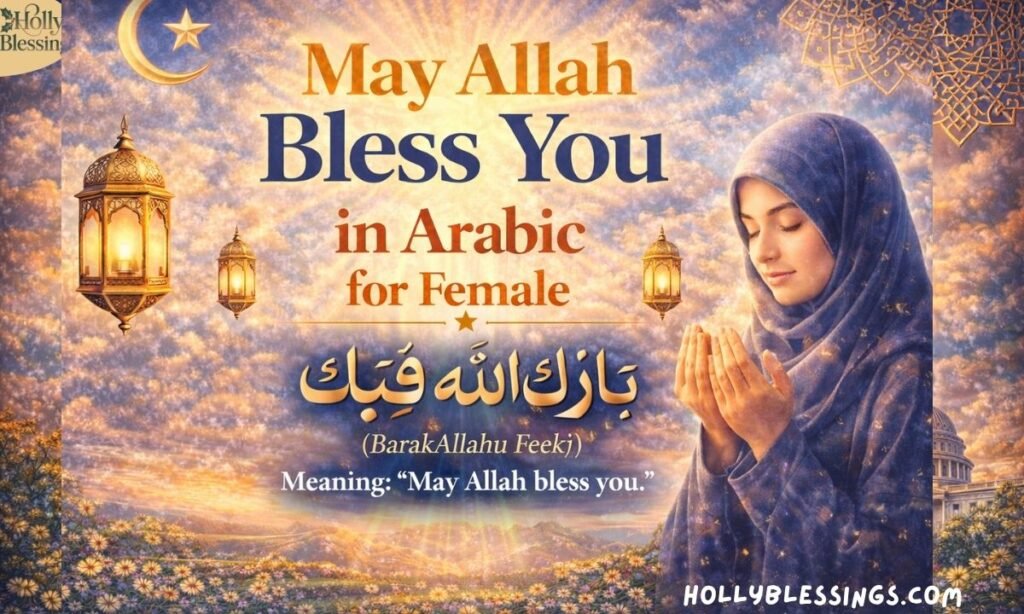
May Allah Bless You in Arabic for Female
- Arabic is a gendered language the phrase changes slightly depending on whether you are speaking to a male or female.
- For a female, the phrase is: بارك الله فيكِ — pronounced “Barak Allahu Fiki” the only difference is the ending changes from “-ka” to “-ki.”
- For a male it is: بارك الله فيكَ pronounced “Barak Allahu Feek”
- When addressing a female, instead of saying Bāraka allahu fīka, you say Bāraka allahu fīki — the difference is the addition of the suffix -ki for females and -ka for males.
- For a group of people, you say: بارك الله فيكم — pronounced “Barak Allahu Feekum”
- This small grammatical difference shows the precision and beauty of the Arabic language.
- Always make sure to use the correct ending — it shows respect and proper knowledge of the language.
- Whether speaking to a man, woman, or group — the meaning and sincerity remain exactly the same.
The Power of Blessings in Arabic and Islamic Culture
- Blessings hold a special place in Islam — praying for others is highly encouraged throughout the Quran and Hadith.
- In Arabic culture, words are not just communication — they are prayers, intentions, and spiritual acts.
- Arabic blessings used daily in homes, mosques, and workplaces build bridges of kindness and create a circle of gratitude and peace.
- When a mother blesses her child, when a teacher blesses a student, when a friend blesses a friend — it strengthens the bond between them.
- Beyond their religious importance, these blessings are crucial for strengthening community bonds, promoting positive interactions, and fostering goodwill.
- Blessings in Arabic culture are woven into every part of daily life — from greetings to farewells to congratulations.
- They remind people that nothing good in life comes without Allah’s permission and mercy.
- The habit of blessing others has continued for generations in Muslim societies — and it never loses its beauty.
What Does “May Allah Bless You” Mean in Islam
- In Islam, saying “May Allah bless you” is not just a nice thing to say — it is a genuine prayer for another person.
- In Islam, saying “may Allah bless you” is not only a kind gesture but also a genuine prayer, deeply rooted in faith and love.
- It means: “I am asking the Most Powerful — Allah Himself — to pour goodness into your life.”
- In Islam, to bless someone means to ask Allah to shower mercy, protect them, and make their life full of goodness.
- It is both a form of gratitude and a form of worship — two powerful acts combined in just a few words.
- The Prophet Muhammad (peace be upon him) encouraged Muslims to make dua for others regularly.
- According to Hadith, praying for others without them knowing brings blessings to both — each time you sincerely say Barakallahu Feek, you are not only showing good manners but also earning reward from Allah.
- This is why Muslims use this phrase so freely and so often — because it benefits everyone involved.
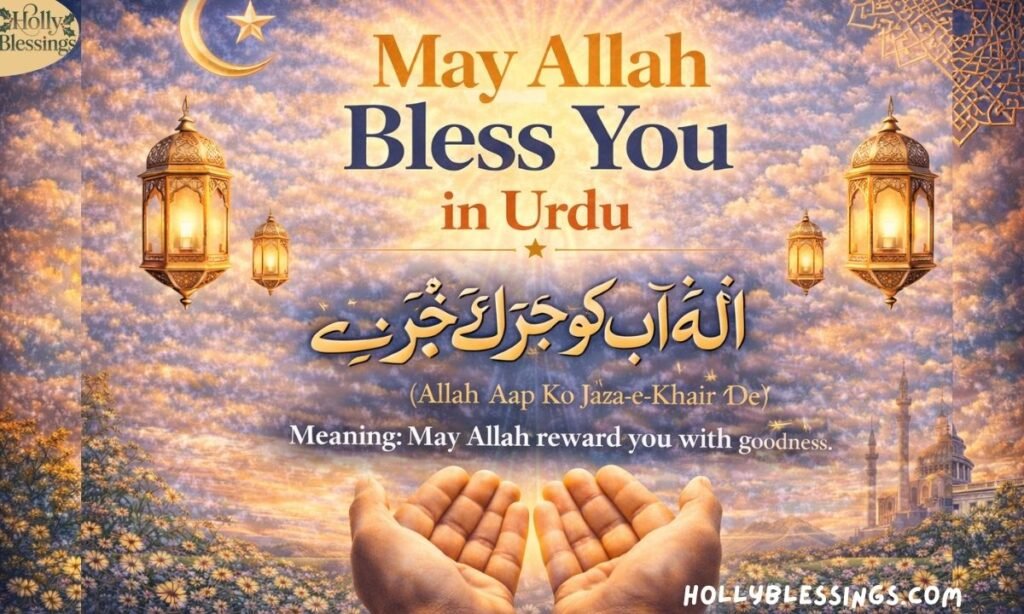
May Allah Bless You in Urdu
- In Urdu, “May Allah bless you” is commonly said as “Allah aap ko barkat de” — اللہ آپ کو برکت دے
- Another common Urdu phrase is “Allah aap par rehmat kare” — اللہ آپ پر رحمت کرے — meaning “May Allah shower His mercy upon you.”
- You can also say “Allah aap ko khush rakhe” — اللہ آپ کو خوش رکھے — meaning “May Allah keep you happy.”
- “Jazakallah Khair” — جزاک اللہ خیر — is widely used in Pakistan and means “May Allah reward you with goodness.”
- “Allah Hafiz” — اللہ حافظ — is a farewell blessing meaning “May Allah be your protector.”
- These Urdu phrases carry the same deep Islamic meaning as their Arabic counterparts.
- In Pakistani and Indian Muslim culture, these blessings are part of everyday conversation and are said with genuine love.
- Whether in Arabic or Urdu, the heart behind the words is always the same — a sincere wish for Allah’s favor upon another person.
Common Arabic Phrases for “God Bless You” and Their Meanings
- بارك الله فيك — Barak Allahu Feek — “May Allah bless you” — the most common and widely used phrase.
- بارك الله عملك — Barak Allahu Amalak — “May Allah bless your work” — used to appreciate someone’s effort or deed.
- الله يحفظك — Allah Yahfazak — “May Allah protect you” — used to wish protection and safety for someone.
- يرحمك الله — Yarhamuk Allah — “May Allah have mercy on you” — commonly said after someone sneezes.
- جزاك الله خيراً — Jazak Allahu Khayran — “May Allah reward you with goodness” — used to thank someone deeply.
- الله يطول بعمرك — Allah Yitawwal Bi Umrak — “May Allah give you a long life” — used as a respectful blessing for elders.
- ما شاء الله — Masha’Allah — “What Allah has willed” — said when admiring something beautiful or praiseworthy.
- في أمان الله — Fi Amanillah — “In Allah’s protection” — a beautiful farewell blessing wishing divine safety.
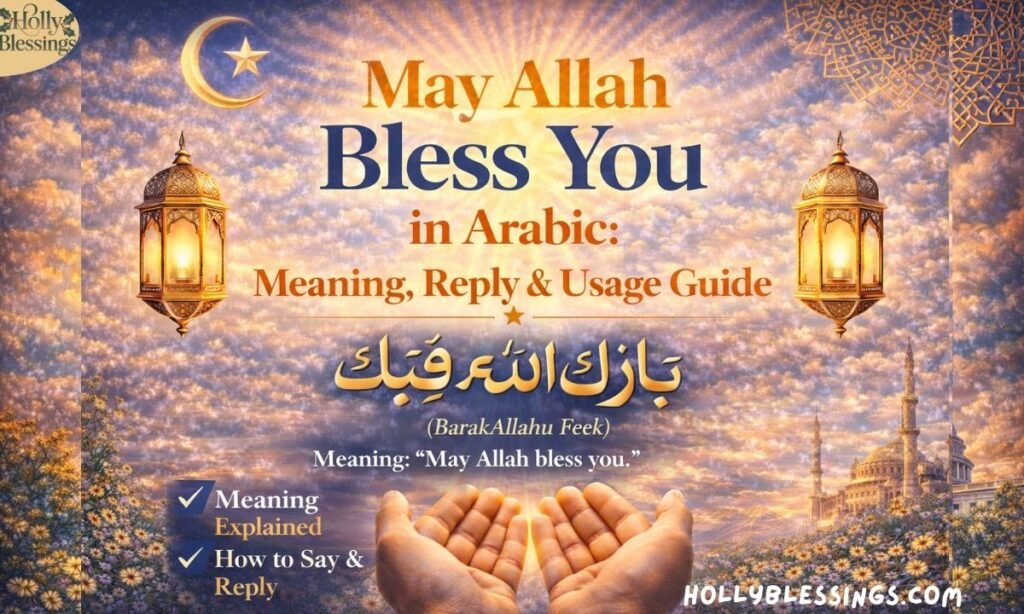
May Allah Bless You in Arabic: Meaning, Reply & Usage Guide
- The phrase Barakallahu Feek is both a blessing and a prayer rolled into one.
- When someone says “Barakallahu Feek” to you, the best reply is “Wa Feek Barakallah” — meaning “And may Allah bless you too” — it is polite and keeps the exchange of goodwill alive.
- You can also reply with “Jazak Allahu Khayran” — meaning “May Allah reward you with goodness.”
- Another warm reply is “Ameen, wa iyyak” — meaning “Ameen, and you as well.”
- Use this phrase after someone does something kind for you.
- Use it to congratulate someone on good news, success, or a new beginning.
- Use it as a general greeting to show love and care for someone.
- In Arabic culture, words are powerful — so they must come from the heart. Blessings said with good intentions often return to the speaker as well.
- Never say it casually or without meaning — let it come from a place of sincerity every single time.
How to Say “God Bless You” in Arabic the Right Way
- The most correct and widely accepted way is: بارك الله فيك — Barak Allahu Feek (for males)
- For females say: بارك الله فيكِ — Barak Allahu Feeki
- For a group say: بارك الله فيكم — Barak Allahu Feekum
- Bāraka allahu fīka is used to express gratitude for any act of kindness — it does not directly say “thank you” but instead calls upon Allah to bless that person.
- Always adjust the ending of the phrase depending on whether you are speaking to a male, female, or group.
- Pronounce it clearly and slowly — especially if you are still learning Arabic.
- For congratulations and good wishes, “Allah yubarik lak” is a perfect choice — and to acknowledge good deeds, say “Allah yukrimuk” to show deep appreciation.
- Practice saying it regularly — the more naturally it flows, the more sincerely it will be received.
May Allah Bless You in Arabic Male
- For a male, the phrase is: بارك الله فيكَ — pronounced “Barak Allahu Feeka”
- For a male specifically: بارك الله فيك — Barak Allahu Fik — this is the standard form used in everyday conversation.
- The ending “-ka” is the masculine form in Arabic — it clearly indicates you are addressing a man.
- Another phrase for males is: الله يبارك فيك — Allah Yubarik Feek — same meaning, slightly different structure.
- You can also say جزاك الله خيراً — Jazak Allahu Khayran — “May Allah reward you with goodness” — to a male.
- الله يحفظك — Allah Yahfazak — “May Allah protect you” is also commonly said to men, especially when they are traveling.
- These phrases are used naturally in everyday Muslim conversations between men.
- Saying them correctly shows both knowledge and respect for the Arabic language and Islamic tradition.
Expressing Gratitude and Well-Wishes in Arabic How to Say
- Arabic has many beautiful ways to express thanks and good wishes — far more than most languages.
- شكراً جزيلاً — Shukran Jazeelan — “Thank you very much” — a simple and widely used expression.
- جزاك الله خيراً — Jazak Allahu Khayran — “May Allah reward you with goodness” — the Islamic way of saying thank you.
- الله يعطيك العافية — Allah Yatik Al-Afiya — “May Allah grant you health” — used especially when someone has worked hard.
- In the Levant — Syria, Lebanon, Jordan, Palestine — “Allah yatik al-afiya” is used instead of “God bless you” quite often, especially when someone has been working hard or doing something strenuous.
- بارك الله فيك — Barak Allahu Feek — always works as a warm, sincere expression of gratitude.
- أحسنت — Ahsanta — “Well done” — a simple phrase used to praise someone for a good deed.
- All of these expressions carry the spirit of Islamic values — gratitude, humility, and recognition of Allah’s role in all good things.
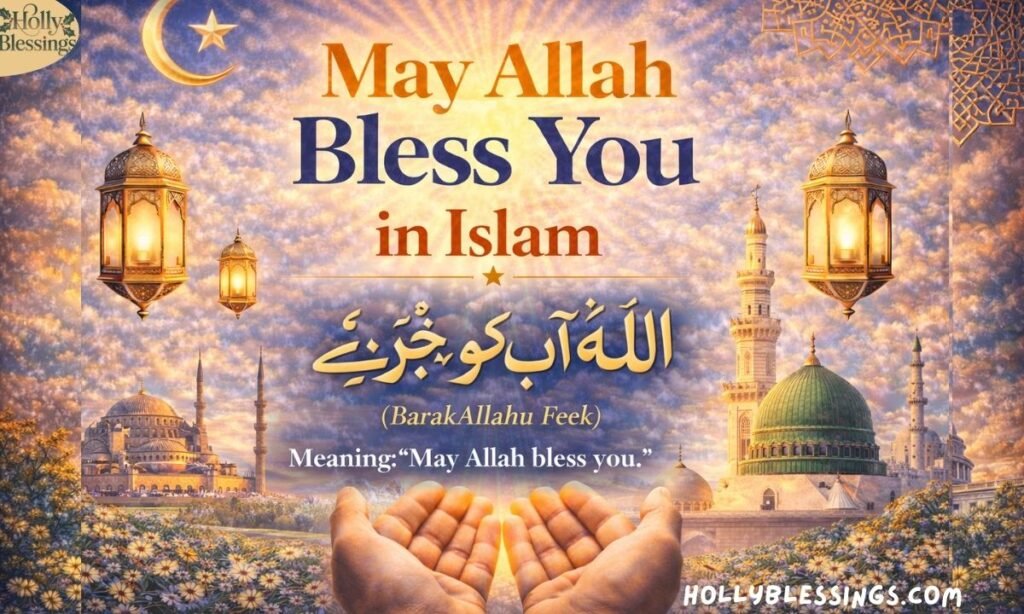
May Allah Bless You in Islam
- In Islam, blessing others is not optional — it is encouraged as a regular spiritual practice.
- Several Quranic verses highlight the value of seeking blessings for others — Islam places great importance on praying for your fellow Muslims.
- The Prophet Muhammad (peace be upon him) regularly made dua for his companions and encouraged others to do the same.
- When you say “May Allah bless you,” angels respond by saying “Ameen, and may you receive the same” — this simple habit carries huge spiritual rewards.
- It brings harmony to relationships and spreads positive feelings throughout the community.
- Blessing others is a sign of a clean and generous heart — one that is free of jealousy and envy.
- In Islam, the more you give to others through prayer and dua, the more Allah gives back to you.
- Making this phrase a daily habit is one of the easiest and most rewarding spiritual practices in Islam.
The Deeper Meaning of “God Be With You” and “Bless You” in Arabic
- في أمان الله — Fi Amanillah — means “In Allah’s protection” — a farewell blessing asking Allah to guard someone on their journey.
- الله معك — Allah Maak — means “May Allah be with you” — a deeply comforting phrase used to wish divine companionship.
- الله يكون معك — Allah Yakun Maak — “May Allah always be with you” — used in times of difficulty or farewell.
- These phrases go beyond surface-level politeness — they are sincere prayers asking Allah to stay close to someone.
- “God be with you” in Arabic is more powerful than in English because it directly invokes Allah’s name as a protector.
- حفظك الله — Hafidaka Allah — “May Allah protect you” — used when someone is going through a hard time or leaving on a journey.
- These blessings remind both the speaker and listener that Allah is always present, always watching, and always caring.
- Using these phrases regularly builds a life rooted in faith and trust in Allah’s constant protection.
Islamic Phrases Explained in English
- Assalamu Alaikum — “Peace be upon you” — the standard Islamic greeting used between all Muslims worldwide.
- Wa Alaikum Assalam — “And upon you be peace” — the reply to the greeting above.
- Alhamdulillah — “All praise is for Allah” — said to express gratitude in any situation, good or bad.
- Inshallah — “If Allah wills” — used when speaking about future plans or hopes.
- Masha’Allah — “What Allah has willed” — said when admiring something beautiful or praising someone’s achievement.
- Subhanallah — “Glory be to Allah” — an expression of awe, wonder, or surprise at something amazing.
- Astaghfirullah — “I seek forgiveness from Allah” — said when repenting or when seeing something wrong.
- Yarhamukallah — “May Allah have mercy on you” — said in response to someone sneezing after they say Alhamdulillah.
- La ilaha illallah — “There is no god but Allah” — the most important declaration in Islam.
- Barakallahu Feek — “May Allah bless you” — one of the most used expressions of love and gratitude in Islam.
Islamic Phrase Explained: “May Allah Bless You” Meaning & Use
- The full phrase Barakallahu Feek breaks down into three parts: Barak (bless), Allah (God), Feek (in you).
- Together it means: “May Allah place His blessings within you.”
- It reflects gratitude, kindness, and faith — and connects hearts while reminding both speaker and listener that kindness is a form of worship.
- It is used to thank someone for a gift, a favor, a kind word, or any good deed.
- It is used to congratulate someone on a wedding, new baby, graduation, or any happy milestone.
- It is used as a general greeting to show warmth and care without needing a specific reason.
- It can also be used as a prayer — saying it for someone who is sick, struggling, or going through a hard time.
- Whether you are learning Arabic or simply exploring how this phrase is used in Islamic culture — it offers a meaningful way to connect and spread positivity.
- It is short, simple, and deeply powerful — three words that carry the weight of a full prayer.
When and How to Use “May Allah Bless You” in Conversations
- Say Barakallahu Feek after someone does something kind or helpful for you.
- Say it when congratulating someone on good news — a new job, a new baby, a marriage, or an exam result.
- In appreciation: after someone gives you a gift or shows kindness, express gratitude with “Allah Yubarik Feek.” During celebrations: use it at weddings, graduations, or when congratulating someone on success.
- Say it when leaving someone — as a farewell blessing wishing them Allah’s protection on their way.
- Say it when someone shares good news with you — it is a warm and Islamic way to celebrate with them.
Reas also What Does “Secure the Blessings of Liberty” Mean?
The Spiritual Rewards of Blessing Others in Islam
- In Islam, making dua (supplication) for others is a noble act — when you say “May Allah bless you,” angels respond by saying “Ameen, and may you receive the same.”
- This means every blessing you give comes back to you — you can never lose by blessing others.
- According to Hadith, praying for others without them knowing brings blessings to both the one praying and the one being prayed for.
- Blessing others purifies the heart — it removes jealousy, selfishness, and negativity from within.
- It is a form of sadaqah — charity — that costs you nothing but earns you immense reward from Allah.
- Every time you sincerely say Barakallahu Feek, you are performing an act of worship without even realizing it.
- It strengthens your connection with Allah because you are turning to Him on behalf of another person.
- The more you bless others, the more Allah blesses you — this is one of the most beautiful promises in Islam.
- Making dua for others is a sign of a generous soul and a heart filled with genuine love for fellow human beings.
How Arabic Blessings Strengthen Faith and Community Bonds
- Language is one of the strongest ties that hold people together — Arabic blessings used daily in homes, mosques, and workplaces build bridges of kindness.
- When a community regularly blesses each other, it creates an atmosphere of trust, warmth, and unity.
- When a mother blesses her child with “Allah Yehmeek,” or a friend says “Barakallahu Feek” after a good act, it creates a circle of gratitude and peace — and over time, nurtures respect and makes relationships stronger.
- These small daily acts of faith have a huge collective impact on the strength of Muslim communities.
- Offering blessings promotes positive interactions, fosters goodwill, and enhances social cohesion within Arabic-speaking communities.
- In mosques, blessings remind worshippers that they are all brothers and sisters under one faith.
- In families, they pass down values of gratitude, humility, and reliance on Allah from generation to generation.
Conclusion
“May Allah bless you” is one of the simplest yet most powerful phrases in the Arabic language. It is a prayer, a gift, and an act of worship all at once. Every time you say it, you are asking Allah the Most Generous to pour His goodness into someone’s life.
Make this phrase a part of your daily life. Say it to your parents, your friends, your neighbors, and even strangers who show you kindness. When words come from a sincere heart, they carry real power — and in Islam, the reward for blessing others always finds its way back to you.
Frequently Asked Questions
How do you say “May Allah bless you” in Arabic?
The most common way is Barakallahu Feek — بارك الله فيك — for males, and Barakallahu Feeki — بارك الله فيكِ — for females.
What is the reply to “Barakallahu Feek”?
The best reply is “Wa Feek Barakallah” meaning “And may Allah bless you too” — it is polite and keeps the exchange of goodwill alive.
Can non-Muslims use this phrase?
While the phrase is rooted in Islamic tradition, it is used culturally by Arabic-speaking Muslims and non-Muslims alike to express goodwill and blessings.
Is “Allah” only an Islamic word?
The term “Allah” simply means “God” in Arabic and is used by both Christians and Muslims in Arabic-speaking countries.
When is the best time to say “Barakallahu Feek”?
You can say it anytime after a kind act, at celebrations, as a farewell, or simply to show someone you care. There is no wrong moment to bless someone.
What does “Jazak Allahu Khayran” mean?
It means “May Allah reward you with goodness” it is a deeper and more formal way of thanking someone in Islam, often used in place of a simple “thank you.”
Why is blessing others important in Islam?
Because it brings harmony to relationships, spreads positive feelings, and carries huge spiritual rewards when you sincerely bless others, you are not only showing good manners but also earning reward from Allah.

I share daily blessings and positive messages to inspire hope and happiness in people’s lives. With over 3 years of experience, my goal is to spread kindness, faith, and encouragement through simple and meaningful words.